Thursday, March 8, 2012

A Mirrored Image

I'm not sure how I think.   I stop a lot throughout the day and wonder how these neurons and microns throughout my nervous and intelligence systems are programmed.  I doubt too much...  Not my thoughts, but the things around me... they make me nervous with their intelligence systems.  I read... I doubt... Mostly politics... some religion... and well a few other things.   The other day, with my skip to my beat, I got a virtual signal from my inbox that life's lessons could be taken for free; some facts and figures on how to take what you want by signing on the dotted line and how it would be the smartest investment decision of you're life; the cost would only be a small fee and your life's soul... A signal from a REIN supremer so hidden with sub-primal tendencies that non-primed engines would never be stopped....  The signal by the REIN supremer in the dark, my response in the light... 

Discover Canada's Top City For Real Estate Investment
Here Are The Facts, Figures & Details You Need To Make Smart Investing Decisions Today
There is no doubt that Calgary is one of the hottest hubs for real estate investment in the country... one could argue the globe over, yet this powerhouse is flying under the radar of most Canadian investors, especially Albertans. The grass always seems greener somewhere else, a phenomenon that never ceases to amaze, but the numbers simply don't lie.   
Calgary real estate has been hot.  And for some time.  While growth in the energy sector has resumed and the oil sands are developed, Canada is ramping its production rate right up to it's export pipeline's capacity.  But some problems persists; our Gateways are closed, and XLs too supersized for other's needs.  We can't move it anywhere.  And to further compound problems, the tea, shnitzel and cappucino makers are considering labelling us as "dirty", but fortunately we know and told the right people in Europe that doing so might lose a few profits to couple of BPs, Totals and Stats and that thing should keep going for a while longer... 
It's time you have the information, all the facts & figures that major corporations are looking at and have been looking at for the past few years. Money continues to pour into Alberta for a reason - many reasons - so take a look at the latest research our team has just put together. This is something we usually keep just for members of REIN™, but not this time - it's too important.
Research is defined as the study of something thoroughly so as to present trends and determine or infer hypotheses of events happening...  Research is not defined as interpreting a small sample data over a short time line and suddenly declare: ALL IS GOOD, we're all getting rich!!  Keep buying!!! and either ignorantly or greedily declairing money is pouring in like Pacman makin rain cause we all good...   Research can be muddled with fake facts and fake fools.  
Take a minute or two, absorb all the latest research included below, and who knows, maybe you'll gain some new perspective on the opportunities available here in Canada.

A new perspective would mean to differ from the status quo... and what has the status quo been?  Buy real estate. Buy BuY BUY!!   The status quo is so so, as the sow and flow of dough was thought at prid-quo-pro, but the pro was so that the dough went to the bro, da b of m's and da t dot c of i b sees.  Da bee o see... See?   Buy means borrow.   Borrow means one thing.  Bucklet boots and beer bellied bottle rockets of bubbles.  Bubbles and bubbles of debt. 

ˈkælɡri/ 
   With a population of over one million people, Calgary offers amenities and business opportunities found nowhere else in Alberta. As such, the city will continue to experience growth as it is recognized as a prime location for both businesses and home owners. 

It is a city in the province of AlbertaCanada and is located in the south of the province, in an area of foothills and prairie, approximately 80 km (50 mi) east of the front ranges of the Canadian Rockies. The city is located in the Grassland region of Alberta. John Glenn was the first settler in 1873, then the gush came.....


 As of the last Civic Census (April 2011), the City of Calgary had a population of 1,090,936, an increase of 19,421 residents (a growth of 1.81%) from the 2010 census. During this time period (ending April 2011), four communities grew more than 100%, reflecting a migration to some of the newer developments: Mahogany (205%), Walden (183%), Skyview Ranch (154%), and Sage Hill (102%)1.
Five communities had population increases of more than 1,000 people. Often, depending on the original number of inhabitants, this number is more telling than percent change (i.e. an increase of 10 residents to 20 residents is still a 100% increase). These communities include: Panorama Hills (1,952), Auburn Bay (1,552), New Brighton (1,236), Cranston (1,186), and Skyview Ranch (1,093)2.
As the baby boomers age, driving the average age up in most centers across the country, Calgary will have a distinct advantage as it continues to attract younger families. This important fact will help drive the economy longer and farther than most other major centers in the country. In other words, as other areas age, Calgary continues to renew itself
.  

So if boomers age, and agers boom... and younger families become more and more attracted, they'll keep buying and buying, building up loads and loads of betchas and dont'chas.   Sure, they don't make money now... but when they do make money, they'll be ready to high five their way to their 5% down and on the five by five plan... just tell them not to worry about those newly formed credit debts from the donuts... and that the best investment strategy is to join the party that every one is invited to!!   The more the merrier... everyone into the pool... last one in is the rotten egg!!!!! 
Despite the overall decline in net-migration compared to previous record years (9,563 this year down from a peak of 25,794 in 2006)3, Calgary will continue to be a magnet for a vibrant populous. Calgary is no longer just attracting people from Canada; it is also becoming a more attractive location for immigrants and foreign workers.
Calgary's labour participation rate increased to 74.5% in the CMA as of December 2011 from 73.4% in December 2010. At the end of 2011, the unemployment rate stood at 5.5%, down from 6.2% the previous year. By the end of December 2011, employment was up 2.9% from 2010. A majority of the jobs created during that time period were full time-positions, adding over 16,000 jobs4. With employment opportunities improving, more people will be drawn into the labour force, preventing any large declines in the unemployment rate. CMHC is predicting the unemployment to drop marginally, to 5.4%, by the end of 20125.
In the beginning of 2008, the CMHC determined that housing sales would be slower, but only drop 3.9%.  Everything was fine... nothing to see here....  but by the end, there were a few more worried at the time that the CMHC was a little off...  and they can always be a little off...

Take for example, advising on mortgages... When advising, they tell you how much and by when... they tell you how often and who to talk to.. they tell you this and that and the other... But they don`t restrict...  and they don`t check.  And when they don`t restrict ... yes, they will drive up the prices of houses.  But when they don`t restrict and they don`t check... and if things get bad... and by bad I mean bumpy... and by bumpy I mean bubbly... and by bubbly I mean not affordable by the bump up in the price of houses... then we might have that correction... 


Housing Trends

Like most cities in the wake of the recession, Calgary has also experienced some ups and downs in the housing sector in the last several years. 2006 and 2007 saw record building permit values and housing starts in the city, while starts dropped off in 2008 and 2009 before increasing again in 2010. By the end of 2011, it appears that market conditions have started to improve.
The City of Calgary reported a total building permit value of $4.5 billion in 2011, an increase from $2.9 billion in 2010 and the third highest year on record. The city posits the building permit value growth to an increase in new builds over improvements. Several large residential projects have bolstered the total building permit value, including the University Residential Towers ($55 million) and Eight Avenue Place - West Tower ($195 million)6.
The Calgary CMA recorded a total of 9,292 housing starts in 2011, a slight increase from 9,262 units in 2010. The increase in housing starts can be directly attributed to the increase in multi-family construction. In 2011, 4,208 multi-family units began construction, in comparison to the 3,480 units started in 2010 (an increase of 21%). On the other hand, single- detached housing experienced a small decline: 5,084 units began construction in 2011, a decrease of 12% from 5,782 units in 20107.
Residential construction is expected to lift even further in 2012 as the economy improves, increasing job creation and net migration. CMHC predicts that the city's housing starts will increase 11% to 9,400 in 2012, with gains in both the multi- family and single-family housing markets. Single detached starts are forecast to reach approximately 5,500 units in 2012, while multi-family starts should hit 3,900 units8.

So to start, we need a beginning.  And when was the beginning?   At the last end.   The last end was when again?  Back then again?    Although they start, housing start stats aren't really indicative of a healthy real estate/mortgage industry.  They need the middle of the start of a recovery.... but if we never really ended the last beginning to end, then how can we start?  Anyways... what starts do is lag... they wait for the all clear and then they start... they don't dig until the dust has settled and the doorbells are ringing... So to say housing starts lead they way to a safer and better housing stats might be a bit misleading... they lag... they let things start.. and then they start.... And in reality, we haven't started that fast... in 2007 we started faster... about 2 times faster back then... To compare the starts to finishes from now till then isn't the best presentation.  That's just weak Don.

Sale and Rent

Getting into the housing market with positive cash flow properties in Calgary has proved difficult for investors in the last decade and that is one key consideration that kept Calgary out of the #1 spot for several years. 2006 and 2007 were characterized by multiple offers, zero days on the market, bidding wars and offers with no conditions. Most home-owners and investors were wishing the market would come back to normal. As the pendulum swings the other way to a buyers' market, we are seeing the opportunities for sane purchasing once again entering the market.
According to the Calgary Real Estate Board (CREB), residential sales in Calgary have increased 8% in the past year, with 18,568 sales in 2011 compared to 17,267 in 2010. While sales activity was lukewarm in the first half of 2011, job growth,

Insanity is reckless... it's harmful and it is sometimes hurts to type responses to virtual signals...  But sane purchasing habits are misleading.  Most mortgages (95%) today high five their way to the 5% down variety, and our affordabilities are being pushed to the limit.  So when affordabilities are pushed to the limits with our gases and our peanuts escalating their ways to  black gold and cashews, we have recorded our debts to record high territory.  So how can it go down?   The answer is, it has to.  We simply cannot afford it anymore.

Stronger migration, and higher earnings all contributed to lift sales in the second half of the year9. In addition, low mortgage rates continue to provide prospective buyers, especially first-time home buyers, with many opportunities.
While sales were up in 2011, elevated levels of inventory limited housing price growth. At the end of 2011, the average price for a single-family home in the Calgary CMA was $466,402, an increase of just over 1% from $461,132 in 201010. The median price of a newly constructed home sat at $457,271 in 2011, an increase of 5.1% from 201011.
One negative of the renewed momentum in Calgary's real estate market, however, is the decrease in housing affordability. Calgary's affordability index is currently sitting at 38.2 for a standard two-storey home, meaning 38.2% of an average person's pre-tax income is necessary to afford an average home in the city. But when compared to other major cities across Canada, Calgary still comes out on top. In the third quarter of 2011, Toronto recorded an affordability index of 61.3, Montreal came in at 52.2, and Vancouver sat at 94.412!

Numbers never lie.  remember that... 

Smaller means better.  In comparing Apple A to Apple B.  Apple B is two times larger than Apple A.  Therefore, Apple A is much smaller.  But when Apples A and B are both larger than the healthy average... then what does that make Apple A and B?  Both higher than normal?     Comparing an index to some of the worst indices in the world that are both indicative of a normalized bubble is not a great way to make an argument for a safe investment.    Numbers never lie.  Unlike the ones in the dark.  

Rental rates in Calgary have also increased in the past year. The average rent for a private apartment in Calgary was $978 in October 2011; an increase from $969 in October 2010. The average rent for a bachelor unit was $705, down slightly from $709; a one bedroom unit rented for $899, up from $894 in 2010; a two bedroom unit was $1,084, an increase from $1,069 the previous year; and a three bedroom unit sat at $1,077, up from $1,057 in October 201013.
Numbers never lie. Rental rates are fine.  These are increasing with inflation.  The numbers do not lie.  Is it better to rent than "invest in real estate".  Don't be a greater fooler.  The Lesser Wiseman told me.  He's smarter than you or I.  But you can also do the math.    The numbers don't lie. 

Increased economic activity will support rental demand in 2012. Improved activity in the energy sector will create jobs and attract newcomers. New migrants are expected to be the main contributor to rental demand in 2012 as many of them will look to rent and familiarize themselves with the city before deciding to purchase a home. As demand for rental housing rises, rental rates are also expected to increase. The average rent of a two-bedroom apartment is anticipated to reach $1,100 by October 2012. However, despite the rise, the average two-bedroom rent will still be below the peak of $1,148 experienced in 200814.
Canada is losing jobs.  The only sector churning anything is the heavy oil industry, while economic activity has stalled with our GDP only being propped by the mortgage industry.   But even our best sector is having problems; we can't ship it east, as they get their oil non-synthetically from the middle East, and have peaked in their growth, so oil consumption may not increase.  We can't ship it south, as they've been boosting their own production and reserves while increasing theirs.. and we can't sell to anyone unless country we get a pipeline.

Vacancy Rates
As the rental market tightened in response to increased economic activity, the Calgary CMA experienced a dip in the average vacancy rate. As of October 2011, the vacancy rate of a private apartment in the CMA was 1.9%, down from 3.6% in October 2010. This is the lowest vacancy rate the city has experienced since October 2007.

A bachelor unit had a 1.9% vacancy rate, down from 4.1% in October 2010; a one bedroom private apartment sat at 1.8%, down from 3%; the vacancy rate of a two bedroom unit sat at 2%, down from 4.2%; and a three bedroom unit had a vacancy rate of 3.3%, down from 5.3% in October 201015.
Downtown Calgary reported the lowest vacancy rate, sitting at 1% in October 2011. Demand for rental units in the downtown area has remained high, as many people strive to live close to their place of work. The Beltline area has also benefitted from increased activity in the core, posting a vacancy rate of 1.7% in 201116.

So you've just moved to Calgary.   Welcome aboard.  We hope your flight wasn't too bumpy on the way through that turbulence.  Here's $500,000, you can be on your way now...

Yes, we've grown.  And we've benefited. And with that $500,000 you get to live in the 'burbs.  There's no room for you in the un-vacated rental boxes.  And if you take that $500,000 and just rent it there's lots of people  who need it - it's just you need to rent it for $2,500 per month to pay for it... hmm... something seems funny...


Top Investment Town
Calgary, the head office center of the west, is no longer a city with wild economic swings like it experienced in the 1980's..  It's economy has diversified  (with more work to do), the population growth continues to be leading the Nation, incomes are increasing faster than anywhere else, and the lifestyle it offers has been rated one of the best in North America.
Receiving an 'A' grade from the Conference Board of Canada17, Calgary showcases many investment opportunities. A growing population, steady job creation and the strong resale housing market are driving growth.
During the economic recession, Calgary's real estate market made a predictable correction resulting in slightly more affordable housing compared to recent years passed. It was economically impossible for the market to continue at the pace at which it was heading and now finds itself adjusting to market realities.  
Here is just one lie after another.  As recent as 3 years ago, we had a wild economic swing.   And as recently as 2 weeks ago, we almost had another.  We are on a constant swing over cycles and balances of supply and demand, which can, at times, be dictated by people who have vested interests.  We cannot control the swings.  Sometimes they miss... but every once and awhile - - they hit.  
The next lie is the assumed value that 'A' is a good grade.   Maybe the student paid off the teacher... maybe the A is not graded on a curve and every one else got A+++'s.... maybe the grade is a given by someone who benefits from dolling out A's all day long... maybe the AAA plus ratings are better?  A grade from a institute that wants economic properties and growth is not going to give you an F- and cause a panic.  It would be akin to economic suicide... 
Well the last one is kind of true;  it is economically impossible for the market to continue at the paces at which is has headed for 13 years without adjusting to market realities:  we overinflated and overborrowed... and we're cooked.
Housing affordability will continue to be an issue in Calgary, with rents increasing and a high average price. However, when we look at that price versus average income, we see that other cities in this country have a much larger problem on their hands. Calgary has the long-term economics to support long-term market strength while other cities do not.
Ah, here is where the lies continue.  Housing affordabilities DO LOOK AT PRICES VERSUS AVERAGE INCOME.   If it continues to be an issue... it will remain an issue.   Saying other cities are worse off doesn't mean that we are not worse off....  It doesn't work to say: "you gone stepped in some big pile of shit", when you are knee-deep as well.... FACK!
If you are investing in Canadian real estate right now or hope to do so soon... or even if you invest outside the country, the information presented above is hugely important. Understanding exactly what's going on in Calgary and all of Alberta is key to making smart investment decisions for the next decade and beyond. So whether you're living in Saskatchewan, British Columbia, Alberta or Ontario, Calgary has to be on your radar as a sophisticated real estate investor. The numbers simply don't lie - Calgary is poised to perform.
I hope this research has been helpful to you and your investment business and if it has, it would be great to hear back from you. Even better - repost, re-blog, forward or tweet anything and everything you learned
!

Please do not invest in real estate in Canada right now.  Understanding exactly whats going on in Calgary and all of Canada is key to making wise investment decisions for the next decade and beyond.  So
whether you're living in Saskatchewan, BC, AB or the t.dot... none of these should be on your radar as a sophisticated human.  The numbers simply don't lie... but in the dark, they can be muddled to look like truth.

Friday, April 22, 2011

Waning Gibbous

Like clockwork, it happens - with a tick tock of beating hearts it never fails, two weeks a month, a beautiful visitor peeks the rays of desolate sun glare and lights our nights skies in the vast openness of space. La lune floats as a marvelous beacon radiating a connection to terra cotta that is vastly understood, yet eerily misunderstood...

Angularly Momented
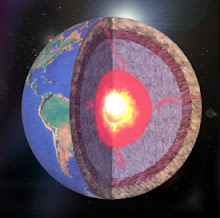
It may have happened like the flash of a boiling pot - percolating and pinballing from corner pocket to parking stall - with chaos in full effect as static, dynamic and ultrasonicular forces bounce through the entropy of waves in gravitational crashes. The moon may have held the perfect amount of rotational and angular directions to graze the side of a new and forming earth, resulting in a spin of angular momentum that perfectly caught each others escaping masses to bond in a unison so delicately cherished - the impact leaving a pressurized core and molten spin in the the bowels of earth - almost like the moon had impregnated a special spin in the earth, one that locked the moon in a gravitational pull that would fertilize the world...

Spinning the chords
As the molten core spun, the earth pulled and waned... groaning at the pushing and pulling - the kicking and gases, the surging and swelling - the earth began to show signs stretch marks - scars of mountains rising high from the spin and spun of the molten core... And locked in tight - the moon held onto the gravitational pull of the pregnancy. But even more miraculous that all, the moon held on so tight, that tiny little molecules began to excite themselves, spark energies back and forth - and cycle themselves with the constant tidal pulls and gravitational tunings - these tiny molecules began to dance and twirl. Twisting with twine and tiny little ribonucleic textiles - the twists became more and more elaborate - as if every two-week dance with the moon turned gravitational pulls into tidal tangos of primordial soup and stew. We had some life. The bacteria were born.

The crusts, the clearing, the shield and the trees
Land masses cleared. Dusts settled and the air cleared. The molten core spun through the chaos and filtered the particles of entropy into tiny packets of magnetic energy and shield - and a livable atmosphere was born. So instead of soup and stew of the primordial slop being continuously stirred in the pot - some spilled onto soil and land. Textiles of nucleic acids turned into sun-soakers - the plants - our green-ness. They found some miraculous way of structuring their structures to program a beacon to soak the light of the day and the carbon in the air and turn it into energy and organic matter - and our greens fertilized the beasts.


Waxing Crescent - Step.. by step.. by step.. by step..
With the moon continuing to pull back on the masses, the calcinated creatures of the deep learned how to walk. It was a struggle at first - but they crept... they crawled... they clawed and they clunked their way to find newer, and well.. greener.. pastures. The beasts roared and clamored up the stretching trees - growing to heights and lengths and weights worthy of reaching the moons close touch - so close and a mere 370,000 km wave in the night's sky it would seem too close to be true - and the gravity was bountiful in these days. With the moon so close, our spinning core's pull of weight and tonnage easily offset with the gentle pull of the moon's gravity. So surreal the pull - that beast and birds of giant proportions could support the calcinated structures of bones against the spinning pull of the core. Until it started to drift.

Drifting to Sleep
At a snails pace of toenails spurt of calcinated creation, the moon has been drifting... a drift so slight and sleuth that 3.8 measures of a centimeter per year moves into the deep horizon. So when back in the day of giant beasts and large lizards the moon began to pull away, the beasts and large lizards began to feel the pull of the earth - the spin of the core. Gravity began to pull it's weight as it's forces were dimished - over the course of 145 million years - gravitational forces from the moon and earth reduced 6% - and the weight of the world came crashing down on the dinos and giant ducks - the calcinated structures so strong and sturdy could no longer hold their weights - the true death of the dinos could be the waning and drifting moon - no longer as close as can be.

So as we find the mammals and fishies and birdies and lil lizards now roaming with a wave now over 384,000 km away, the moon still flourishes us with constant gravitational pull and cycled determination. It will hold on tight from generation to generation. But as bones grow to great lengths, the pull of the earth is always increasing. We must always return to the earth. It is truly, our only real destiny.

Thursday, April 7, 2011

1.6% of my life...

Stretched Thin
As my back tightens, and my shoulders feel the brunt of the long hourly grind of pushing little woven fabrics of pulped and processed bits and pieces of information through the highway of idiocracy, I find solace in my ultimate saviour - the intra-wide web. As my fingertips roll through the preemptive strikes on the keys, as if muscle memory for every nerve of my occular beings are transmitted through the clicks of a mouse, I find myself amused. Our national pride is on display as our nation prepares for it's future ride with another Prime Minister.


Circling the Wagons
Our candidates are well known - the massed presses of the media outlet won't skip a beat - they'll pound every story whether the material is soft, hard, woven, piece-mealed, clovered or rednecked - and clearly our country is full of them. But maybe what isn't quite being covered is their respective approaches to their tactics; one using Republican-style smack down with daunting voices and nervous contempt, another almost being a complacently terrible used car saleman, almost as if his half-crooked smile is repeating: "C'moooon.... this other guy's a crook", and the three others just trying to keep their pasted smiles from slapping the first two.

In any regard, the opposition has been careful not to tread too deeply into a taboo topic of tankers, trucks and sticky ol' bitumen. Alberta, and ultimately Canada, have sunk our nails deep into the breadth of the beast - Washington, DC. We've sent our finest diplomats and ministers, all to act as our people's voice for our precious product. We're selling our resource - not just to the highest bidder, but to our closest neighbour.

Not quite Tar... Not quite Oil... Is it Chicken!!!?
So the Oilsands, tarsands, whatever. It's actually called bitumen. Not quite tar. Not quite oil. It's bitumen, stuck in sand. The Natives used to use it to patch their boats with. You see, when cold, it acts like a water repellant, and you can almost make hockey pucks out of it (no wonder us Canadians must love it eh?!). But what it needs to pump and separate from sand is a bunch of heat. Steam to be exact (or hot water, really hot water). So to extract it, we plug in the kettles, sort of - anyways, we burn a bunch of energy - clean natural gas really - or sort of clean if you remember to count the carbon. And then to make sure it doesn't refreeze into hockey pucks, it's mixed with oil. Yes - oil is used to make other oil. Or condensate to be exact. Not quite oil. Only the lightest of oil. Olive oil, almost - well... not quite. Anyways. to sum up, a bunch of wood is chopped down and rivers are polluted - I digress; that's my summary of the oilsands, or tarsands, or bitumen, or oil user, or gas user or tree chopper or river polluter. It's kind of under the spotlight by the US as a not-so-squeaky-clean product.

A Choice of 1.6 Concerns
So in order to make it a squeaky clean product and get the seal of approval to ship it across to our good ol' neighbour, what does our government do? I'll provide two options:

1 - Immediately address elevated levels of pollutants in the waterways by reducing the point source; address climate change by adopting Environment Canada framework for reducing oil sands carbon footprints; develop a strategic outline of responsible resource development through planned, orchestrated production increases
or
2 - throw millions of dollars towards monitoring equipment and never really stopping the water pollution, scrap the climate change plans, cause hey; what Canadian doesn't want our winter to be a little warmer right? and finally, we'll green light every project that plans to produce bitumen, jam a pipeline down the US's throat by sending a bunch of our best oil saleman (i mean government officials) to lobby on behalf of an industry we own no part of.

Whew....
I find myself flabbergastroided (kind of flabbergasted, but mostly feeling gastrointestinally haemorrhoided) - instead of a government that will keep our air and water fresh and clean, we have to settle for one that's willing to lobby for an industry that employs 550,000 (2006 statistic), or 1.6% of all Canadians (again 2006 statistic). When did 1.6% of us represent a majority? Our statistics are telling us that climate change is real and effects all of us - should our government not be focussed on all of us instead of 1.6%? For myself, I've planted into my leftwinged attitude into a conservative stronghold, left stuck to wonder how so many blindly choose to check a name for fossilized principles - and fossilized truths... we don't own any of it, but we are definitely paying for it.

Saturday, April 2, 2011

Bastionated Bastards

So here it is, a return to the ignorant, jackanape interpretations of the spin columnists, press quotationists and news-junked loyalists.

I’ve sat in a desk over the past years attempting to dodge my counterparts as they heave oil-slung messages of hope for the Great White North’s bastion of barrels. One was quoted as saying: “why don’t we trap the environmentalists with cheeseburgers from McDonald’s and fling them off a tower”, which was my favorite. And although I am temped by delicious cheeseburgers and would gladly consume one even in the face of danger, my interpretative nature questions how an old dinosaur could possibly be so idealistic with a pave and produce mentality that a hatred develops towards anyone who hugs a tree? In any regard, the idealists have come out in force over the years, and are proud and loud of our economic stranglehold.

One such case; today an article published words on the intraweb indicating that our Great White North’s slew of slimy succulent synergistic soup was being hailed by the US President as: “open for business”. Obama was quoted as saying the US would slash US Oil Import by more than 30%. He continued by saying Canada and a handful of other countries would keep the taps open. The spin columnists were able to manipulate the text and identify that can Canada was singled out as a preferred supplier. But I ask, how can we be single out when there are a quote: “handful of others”. We aren’t singled out. We supply, others supply. We are foreign and the US must import our oil. So how did a speech about reducing foreign oil imports and a speech indicating a move towards renewable energy and acceptance that oil will run out an approval to open our taps further and all is peachy-keen in the bastion of bubbly bitumen? It wasn’t. I read the opposite. But maybe I’m full of cheeseburgers…

Tuesday, July 28, 2009

Lowering the Bar

Everybody eats - yes? It really doesn't matter if you're a vegan, cow-hide slicer, vegetable monger or a chicken little - food tastes good, and food goes in your belly. It's remarkable what our stomachs can tolerate - the organ itself is by far, in my opinion, the most underrated organ. Yes, the brain gets alot of praise, the skin if often gazed at in mirrors for hours by some, and of course the copulatory members of our bodies are sometimes put on pedestals for showcase, but the stomach can be considered as our personalized waste recycling centres - we take in the good stuff, process it, and spit it out our other ends as a compact receptacle of a black fly's dreams. What's even more amazing- any materials or items that shouldn't be there (like that hotdog I once ate at 3:00 am from the 7-11) are quickly rejected as a foreign material, and regurgitated as filth.

Filth to the stomach is never a pleasant thing.

Crumbling Cookied Monsters
Food today serves the same role it did yesterday, the same role it serves today, and the same role it will tomorrow - nothing has changed in the role of food - I still enjoy a good perogy layered in onions and sour cream as much as I did years ago - but what has changed is the perception of food - the attractiveness of it - its cultural significance - its delectability - and most importantly - its marketability. The invention of a new food is revolutionary - Coca-Cola can attest to that, but the ability to offer and distribute food has also found its own revolutionary path - as although food's role will never change, the layers and levels of intricate impacts from the systemic distribution of food is making it a very scarce commodity.

Food starts its long journey well before we unwrap the preserved goodness from the Twinky, to be a little grandeurous about it, it starts at the sun. Waves upon waves of unkempt beams of light continuously beat down on us, repeatedly bringing free calories for indiscriminatory use. Now the question of what came first: the seed or the leaf brings on nightmares of creationistic dilemmas with the chicken and the egg, but the seed (as does the egg) forms a membrane surrounding complex bits and pieces (or cotyledons and epicotyls, for the lack of a better term) mimicking the steps of its single-celled brethren colluding in the petri-dish. But unlike its single cell cousin, who simply splits into two by the pre-programmed nature to divide and conquer... the seed has another calling - it sings a different tune in harmonic programming... it has the recipe to take those complex bits and pieces, or the C, H, O and N, and line them up in perfect rank and file to form a structure of true magistry - forming the bonds of renewability and growth by simply soaking in the rays of the Sun, and sucking the gases of our grumbling bowels - all through the formation of carbon chains supporting a beacon of Magnesium at the tips of it's chlorophylled antennae.

So after all the steps and pieces and membranes and xylems are put in place by each plant cell, we chop them down. Normally, we grind them into bits in pieces, sometimes, we bundle them up and let the water-logged weight deplete to shippable capabilities. Either way, it's an abrupt intervention to an otherwise simple existence. The next steps in the path of the food's chain is a much more complex, as the layers upon layers of intricate idiosyncratic idealogies hide a worse stench the rotting brussel sprout in the bottom of the refrigerator door.

Oscar Meyers Grouches
It began with a well. Blood spilled like the milk from the cow, and derricks erected beacons of prosperity for the snake-oil salesman - it began with the discovery of another bio-sequenced hydrocarbon - left over from the eons of solitude in utter Om. The remains of once vital beings and organisms were pushed, pressurized, and left to sit... and wait... until the wells were tapped.

At this point, the Earth must have felt a coercive 'oomph' to its lymph nodes as its immune system felt a sudden shock of panic. Penetrating probes were waving shocks of nuisant exploration, and an otherwise delicate balance of life-cycling carbon in the craters and formations of its underbelly was getting a rude awakening. The carbon cycle took an immediate influx towards chaotic principles of Second Law nature, the thermodynamic imbalance was in full thrust mode - oil was pumping, and oil found a home.

Rock oil production, or 'Petr-Oleum', as the Ukrainian contend, first began as a refining process of kerosene from coal. The discovery that hydrocarbons broke down their complex chains through heating spawned a era of quick fix ideas and inventions all designed to make life a little bit easier - but as waist bands expanded around the porkly product of laziness, so did food - easier lifestyles were bred from easy solutions, and easier lifestyles led to comfy couch cushions, and comfy couch cushion necessitated lazy products of consumption - our food.

The key ingredient to the recipe for success is transportation. It worked for Kellogg, it worked of General Mills. The solution was simple - bring in feed products from the cheapest provider to a central location - at this central location, processing would occur, along with packaging for distribution. Sales orders would and could also be filled from this location, however as things expand and grew, private, localized distribution centres could also be set up successfully. The underlining packaging hidden in the layers of the diglycerided preserved goodness of the Twinky was transportation.

Two Headed Monsters
Unlike the network of transportation, which boomed with every oil well that spiked production, the network of food has de-evolved from its once diversified portfolio. It was common to find farms and countryside bungalows full of fresh-picked delectables - ready for a quick wash and cut. Oats, hay, rhubarb, strawberry, cabbage, gooseberry, peaches, grapes, wheat and corn used to be only a quick drive down a country road. As the waves of industrialization swept across ocean to ocean from between 1920-1970, the ability to transport goods over long distances brought microwaveable popcorn, packaged flour, Shake N' Bake - essentially, concoctions of processed goodness in food wrapped its cellophane package across the industrial parking lots of the world. No longer were we required to hunt and gather - we could simply drive down the street and receive a pre-package processed meal ready for the trip through the tracks of intestinally lined walls. What ended up occurring, was a market of supply and concentrate. The demand of large distributors of processed food concentrated the production of said food into localized areas. Farmers began focusing on reserving their land for specific crops - diversification lost its way as Mother Nature felt a stab to the ribcage - from being able to provide what was arguably the seed of sustainable growth - farmers turned to product-specific targeted growth - essentially the same thing a fetish whore does for their clients. And as with the fetish whore who overuses its resources, farmers soon found their land crusty and full of depleted sores - all from overfertilization and overuse.

So as uni-versification goes, transport was the key and concise contributor - trucks ready to ship from Points A to B, X to Y and Z to C. Food began shipping from the farm, being processed at a factory, package and re-distributed - virtually every morsel of food began travelling greater distances than the pioneers who seeded them. A tributary from the food migration was the development of the WASD, or weight averaged source distance, and in areas of the North American continent, WASD has grown to average over 2400 km of travel for a piece of produce to get to the grocery shelves.

And within the complex network of highways paved across continents, the complex network of distributing and processing exploded. Businesses were abound all eager and ready to jump on the next marketing campaign for items like 'Bilk' - beer with milk - and 'Season Shot' - the ammo with flavour - never get bullet taste in your game bird again!... Products could now be shipped across oceans, and allowed to infiltrate a reach of consumerism never seen before. This reach, however, has been stretched to the tensest point in its existence, one could argue.

Snuffleupaging Shot
Through the distribution of food, raw materials are harvested from a farm. At this point, material are typically bundled and packaged for shipping, and are either sent to rail loading stations, a distribution centre. Very rarely are products used locally for sale - this didn't used to be like this... So at the distribution centre, waybills track data and weight at points of sale into the network of uses. Some may go to nearby grocers - but most branch off towards to distant processing facilities. Once processing is finalized, items are repackaged and diverted again to far distant distribution centres once again, which are finally dispersed to local grocers and stocked shelves. In total, from the point of sale to the farmer, in all likelihood, your food as gone through two distributors, a processing or manufacturing company, while utilizing three or more trucking companies to finally hit the grocer's store. In total, it could be reasoned that every morsel of food you buy goes into a percentage of 3 truck driver's wages, 6 accountants fees, 4 lawyers anal gouging, 3 distribution agents and managers procrastinating prognosticating, and numerous board member's increase to share price and dividends. In all of these steps and complexities to eating a meal - layers and layers of occupations and labour are utilized - and within all the layers of labour and utilization is the hidden driver behind escalating costs of food - profit. It seems quite logical, that under a streamlined effort, the magical equation can be dividing into 2 truck driver's wages, 1 accounting fee, 1 lawyer, 1 distribution agent and manager and fewer board member's profit fees - a guess could be made that under a localized supply and demand structure, food costs could be cut in half, possibly twice...

So as layers and steps are added to the food distribution chain, one constant remains in all of heaping costs lumped into the recipe for success - energy use. Energy consumption happens in the farm equipment harvesting the first crop, from the semi-trailers hauling long distances to the processing facility, to the facility's industrial energy use in completing processing. As you drive to pick up groceries, an immediate cost is used in that transport. So in my convoluted rants, one thing is obvious - food and energy are tied at the hip. One thing I pointed out is the scarcity of the situation - as energy goes, so does our food. As energy increases in costs, so will our food. So in a time when debt ratios paint bleaker potential than the market confidence splashed across news pages - our wallets will become lighter at a faster pace. Cheap oil is becoming scarcer and scarcer - the Oil Sands extraction at the edge of the Canadian Shield are evidence of that. So as a resource becomes scarcer, and more expensive - this cost will balloon - and so rises the cost of our food. The barrels of oil have spilled, creating a slippery slope of inflation ready to soak the world - the repercussions of this will become more evident as oil reserves become depleted over the next 40 years...

Count Von Counting Carbon
So food is tied with energy - however energy is being tied with the thing called greenhouse gases. The term 'greenhouse' is typically reserved to a humidity and temperature-controlled environment in which carbon, water and oxygen cycles are in full renewable health. The greenhouse gases which are tied with energy are by no means relateable to a greenhouse. The carbon cycle is in complete disarray as emissions are pumped into the atmosphere, in which the Earth does not possess enough chlorophyll to keep up with supply. The prognosticators will say that this will heat the Earth ever so gently, bringing severe climate change and economic catastrophe. To remediate this, the World is prepared to cap and trade our problem. With cap and trade, we are conscientiously choosing to reduce our emissions whereby every company will be required to reduce or limit the generation of CO2. If the company is not available to reduce or limit the generation of CO2, the company can purchased CO2 credits generated by do-gooders or otherwise.

The items in this proposal that concern me are twofold - the first being that regulating CO2 emissions from companies will allow the company to pass the saving onto the consumer - meaning that every item or service could have an 'environmental CO2 levy' attached to it, either being spelled out such as I did, or being masked away under the 'profit' margin attached to your invoice... This is no further observed than when energy companies declared: "Energy costs to triple with carbon capture". They have already stated that CO2 cap and trade will be passed onto the consumer. The second concern is the market. As fictitious and head-scratching as the question: "What is the stock market?", cap and trade has the potential to tie itself into the speculative nature of confidences, indices, potential and bullish behaviour. As CO2 sinks deeper into the pool of economic divergence, collateral interests and intervening accumulation - we are conceivably seeing the next boom tick tocking its way onto Wall Street. And as CO2 gains value - so does our energy, so does our food and our repeated reliance to the complete acceptance of status quo...

"... chasing the clouds away"
It starts at the Sun. Jimmy Carter first introduced a plan in 1979 - his goal was to provide the United States with energy derived from the Sun - his target was 20% by 2000.

Solar technology today is limited due to limited demand, high cost of raw materials and in general, the total amount of raw materials required. On average, costs range from between $7 - 12 per watt installed. So for 1 GW, it would cost between $7,000,000,000-$12,000,000,000.

The U.S., in 2005, utilized approximately 435 GW of electrical energy. In 2008 the U.S. utilized $700 billion for 'bailout purposes'. In 2009, the U.S. utilized $787 billion for 'stimulation' purposes. In total, some estimates cap the total 'bailout' cost at $4 trillion.

For $700 billion, between 58-100 GW of solar power could be built, or between 13%-23% of the U.S.'s 2005 electrical consumption. For $1.487 trillion, between 123-212 GW (28%-48%). For $4 trillion, between 333-571 GW (77%-131%).

Re-Casting the Street
I've only voted once in my entire life. My first opportunity, I was most likely naive. I didn't have an appreciation for clean streets, affordable housing and the general ho-hum of everyday life. I suppose the politics and government didn't really have any numbers - it seemed all fictitiously instead of sciency. But at my first opportunity to vote - I did - but I didn't know the issues, the campaigns, the slogans, nor the candidates. I felt dirty afterwards... casting my vote for something I didn't know. Every opportunity to vote now still makes me feel dirty - and now I feel like I do know the slogans and campaigns. One promise I always hear is that they will make my tax dollars work. At this point in time, I do see my tax dollars at work, but at the municipal level and provincial levels only. I see hospitals being funded (and cut), roads being paved and streets being cleaned... At the federal level... the level primarily responsible for energy, economic growth and health and environment - we've been two steps behind our best intentions - as much as Canada depicts its economic prosperity and environmental stewardship, we are truly nothing but resource whores - complete with salty lips and salty hips. I can't see any renewable forefront from our borders for quite some time.

In the U.S., the commitment to renewability has been started, although there still exists the opportunity for 'hands in the cookie' jar with the cap and trade. But as iterations go, it's a start... One question to pose however is renewability - the use of free energy from outside sources. Renewability, in it's nature - is free - so as we approach a renewable age by the predated specifications in 2050 - with the 50% reductions or 80% steps to renewability - keep a wonder why things are no cheapers, nor cost effective. The layers of CO2 can infiltrate the food chain, coughing up bubbles and bubbles of hidden inflation - and as the cap and trade systems are being proposed today, consider alternatives, like the direct investment of GDP into renewable energy - essentially allowing the taxpayer to own a renewable source of energy. In direct investment, money will immediately stop environmentalists from spewing greehouse garbage, curtail inflation by helping those apples, pears, dyglycerin, monosodium glutimate and Twinkies be processed a little bit cheaper, all while providing a reduction in wait times at the unemployment office and lighter heat and energy bills.

Sesamic Limbo
I'm on the verge of returning to employed occupation after a long hiatus. I'll be returning as a producing member of tax-paying society - primarily driven as a result of the ever tightening debt-ratio incurred through 7 months of incomeless ratios. But as I've limboed under the bar of debt, I've realized solutions are simple to sustainable budgeting. I've had to change a few habits (like turning the shower off when scrubbing - it's so much more pleasant without a chaotic waterfall) and will still have to change a few (like 3 a.m. hotdogs) but it's a step towards lowering my economic bar towards a more renewable outlook...

Friday, July 10, 2009

When the Well Runs Dry

Statistics Canada released their unemployment poll results today - on cue and within the call of exasperated whimpering, the results paint a picture of rosey recovery. Lately, the poll results have percolated waves of uncontrollable anticipation in my fragmented bones - each month eagerly anticipating expectations of analytical, statiscally woven masterpieces... this month did not dissappoint...

Spudded Roots
As a Nation, Canada has built itself on living up to the self-proclaimed moniker - "The True North Strong and Free" - it is true that we drink beer, can have cold long winters in the Prairies, and really, really pride ourselves on our resources. The lands of the true north were first settled by the migratory paths of the First Nations, visited by the Vikings, then settled, colonized and patriotized by the British and French, and finally globallized with our hockey haircuts, lumber and hydrogenated carbon molecules. As a young child, I used to honourably chant our national anthem, I would stand proudly and envision our great country full of trees, mountains - mother nature at its finest - it was almost the only thing that would shake off the incurable shyness from my innocent voice... That was until a new slang entered the precipices of the stars and stripes, or red-dyed maple leaf, in the instance of my home nation.

Exporting Pipelines
I was in Pennsylvania at the time, the leaves had fallen and the countryside was darkly stained with the onset of winter in 2007. I was travelling with two older mentors, so to speak, pitching a project which tied directly with the surge in activity in the true north. The Americans, were relatively new to the concept, having received broadcasted analysis from 60 minutes in January of 2006 - they were relatively confused as to why a product would be extracted without generating some type of electricity, or co-generation, as the industrialists coined. In any regard, the moments not spent in meeting rooms were typically consumed driving countrysides which hid peppered settlings from the Amish. What was most noticeable in the quiet moments of contemplative messages exchanged with the ever-escaping horizon were the number of homes for sale dotted along the passing roadside. Curious to my new itch, I inquired on the facts - and was duly noted to hear that an oncoming mess was about to hit homes from west to east, and the turmoil and splatter would not be quick to wash off...

The sub-prime mortgage mess was first explained to me at this time... indexes and confidences were at a peak and markets were ballooning with prosperity and promises of more - people were consuming the words as ravishly as they were their expendables incomes - and an amateur economist with a dime-store degree in engineering mechanics raised on a potato farm from the true north explained it all, or 'forecast' as the top executive economists would publish. It was remarkable really, as studiously as I searched for answers in top-rated publishings and economic magazines - very few verified this madman's claims - an economic crash was as close as assininity was to an ass. But all in cue and on target - banks popped and plummeted as the truth was finally revealed - it seemed as though nobody saw this coming, and the promise of quick relief, blips in the radar, resurgence and recession-proof were soon spread across article to article.

Percolating
As the time ticked by and pages upon pages were reviewed and examined with explanations on how we got here, the promises of relief and returned revenue spread across newsprint, or webpages as we now know them. A new leader of the States proclaimed a calm amongst the masses, and a partial resurgence in the beaten and bruised economy emerged. Economists once again become figureheads in determining the exact length, time, location and speculatory existence of a renewed recovery. Facts and figures in the economists articles were instead replaced with distorted statistics and allegorical words like confidence and sentiment... As soon as consumer confidence was restored, sentiment towards ravishing ourselves with lavishness will propel market emergence - so told the tale of the market economist. But in this tale, a paradox that dances with chickens before the egg is hatched suddenly cracks its embryonic fluids into the skillet of hot kitchens - the masses must first be employed before they can spend - but if no one is earning anything - how can the flirtatious relationship with consumer confidence be rekindled?

Completions
As statistical analyses go, I'm an amateur at best - I once described my experience in collegiate studies in Statistics as more favourable than an enema, yet slightly worse than a kick in the balls... But as statistical eggheads go - my shortcuts and lazynesses have led to observatory embellishments.

For starters, unemployment continues to be the key figure in restoring a healthy economy - but at the present moment, we are stalled in the effort to lower unemployment. The statistics released today have been proclaimed as 'the relief we needed' - as if the published letters were acting as the Advils and Aspirins in our worries. But hidden amongst the straw and haystacks from the plains of the true north's statistics are the summer surges of part-time playbooks - data which doesn't represent the true plight of our struggles as companies have recast their votes in the survival to compete in an everclosing competitive industry - part time statuses have surged, even the senior populace of 55+ have returned to work, no longer supported by their peers and families - and have begun overtaking the youth in employment - a decrease in youth's work means an increase in family support - and an increase to the debt ratio of the normalistic household family. Yet many pieces of the puzzle have yet to be revealed - unemployment statistics only tell tales of scripted categorical numbers - what truly reveals the health of the economy is the total income of our patrons - and by part-time status surges - this indicator could well have taken the biggest hit of all...

Another note in note taking is that a recent development at the G-8 summit proclaimed a standard for combating the global climate change war. The highly developed nations have set their sights on an end-target. Yet as the stools stood in the wake of shadows, our leader shook a hand in the slightest of contradictory poses - the aides and cabinet walkers perhaps could not mime the puppet to speak its spoken scripts: Canada committed to the global war against heat. Yet hidden in the black bunkers of the bases in our fortresses, the commitment seems to contradict the cavalry of cowboy connoisseurs of synthetic crude oil that our leader sent to the south - and in committing to the cause, we could have possibly committed economic suicide - our prized possession of economic prosperity and fortitude has little bubbles of oxygenated carbon seeping from it's barrel - our prized resource has suddenly been labelled as the key enemy in the fight against climactic terrorism. It's as if the good minister of masses nodded politely as the pain from the bullet shot through his foot surged the nerve cells towards complete agony.

Another noted inquiry of observational madness I've made, is that the housing bubble we once created has been held firmly in place with branches of structure from the CMHC. At the time of the bubbling burst, we surged and stressed our debt indicators to a capacity never before seen - investors flocked like seagulls to the discarded breadcrumb - increasing borrowing limits to the teetering totter of a leveraged crutch. The bankruptcy statistics are showing this - the foreclosure statistics continue to mount - yet we continue to build and build. The bounty of the surge jacked up the rates on home ownership from 2004-2008 by 80% in some cases, and although the customary 20% regression has been experienced and tolerated, it is far below the
additional 25% regression required to match the normalized 5% trendlined increase of a 'regular growth' product such as real estate experiences. In my layman perspective - alot of money will be lost in fictitious equity as things slow down to the pace that growth should have occurred - we hit a pre-pubescent growth spurt, and the true north strong and free is become feebly weaker and fainter in our chants.

A final allegory to consider: the re-emergence of another U.S. housing collapse. The initial surges were positive in wiping out the bad debt owed by the sub-prime mess - but as waves and surges go, the sub-prime fiasco instigated a propelling tsunamic force that led to economic collapse and high unemployment. As months continue to roll from new moon to new moon, wallets have become squeezed, and the 'practical' home buyer - those that were employed and positioned a valid mortgage - will emerge as the next purveyor of lost fortunes - the U.S. is precipitously balancing on another hit to it's homefront - a population of bad debt cratered from unemployment... And as patriotism drums fainter and fainter beats, Canada, whose exports are up to 75% tied to the tune of the withering drums, will be suffering a similar fate - a wave of increased unemployment will surge through the ranks of consumerism bringing increased tension, retrospected perspective and the review of how things unfolded...

Abandonment
The above noted stripes in my critical stance on the Canadian economy can easily be defined as pessimism - the outlook I paint is gloomy, as an economist would note. However the pessimism emitted is rooted in reluctance towards the blind optimism portrayed by our media-hungry economists - it seems that the prevalent thought is that optimism breeds confidence and sentiment. It's my pessimistic viewpoint that highlights that blind optimism always has that twinge of faith and the unknown - and when things are unknown, how can confidence spread? Confidence is the ability to know how things works - to know what's what is who's who... confidence is the surge of information and quick acknowledgment of any situation and it's outcomes - and right now - no one seems to know what the economic recovery will look like... As it stands, we're shifting our employment towards seniors - our youth will be suffering a setback in their money tree seeds - our employers are trimming costs and executing 'efficiency programs' - our energy exports are labelled as dirty oil and our homes are overvalued and incomes are depleting - yet as pages continue to update and refresh, more information is passed that will convince us that we've turned the corner - those that dive into the corner too fast will be caught in the momentous inertial pull of gravitational forces - forces unseen yet potentially catastrophic...

Transparency is truly something that can never be seen...